 Image 1 of 1
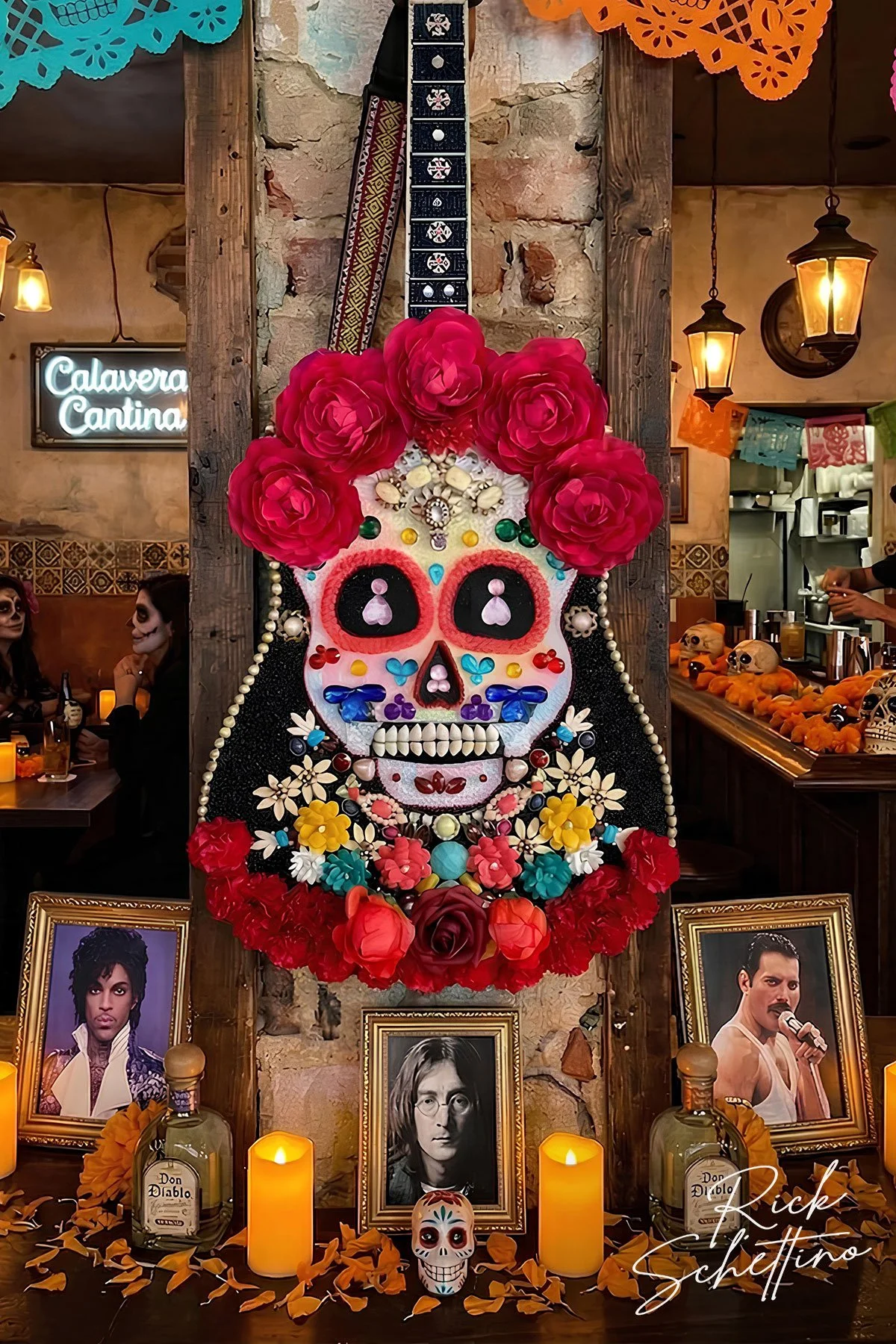
Día de los Muertos is not a scary or sad holiday. That's the first thing most people get wrong. It's a celebration — loud, colorful, and deliberately alive. Families build ofrendas — alters loaded with food, candles, photographs, and the cherished possessions of the honoree. The point is presence: the dead are still here, still part of the community. Music has always been central to that. The skeleton musician is one of the holiday's most enduring images — bones playing guitars, trumpets, violins — because across Mexican tradition, across every culture that honors the dead, music is how the living call out and how the dead answer back. A guitar at the center of an ofrenda isn't decoration. It's an invitation. The sugar skull is Día de los Muertos' most recognizable symbol — a reminder that death, like life, can be beautiful. This sculpture takes both symbols and merges them: the guitar becomes the calavera — or decorative skull. Adorned with luminous beads (the skull glows in the dark), gemstones, and flowers, it's built the way ofrendas are built — with intention, with color, with the conviction that beauty and music are the only appropriate responses to mortality.
Before placing an order, please contact me to confirm availability. Some pieces may be on exhibit at a gallery and already reserved. I'm happy to answer any questions about the work and arrange shipping or local delivery. Just drop me a note on the Contact page or email me directly at rick.schettino@gmail.com.
Día de los Muertos is not a scary or sad holiday. That's the first thing most people get wrong. It's a celebration — loud, colorful, and deliberately alive. Families build ofrendas — alters loaded with food, candles, photographs, and the cherished possessions of the honoree. The point is presence: the dead are still here, still part of the community. Music has always been central to that. The skeleton musician is one of the holiday's most enduring images — bones playing guitars, trumpets, violins — because across Mexican tradition, across every culture that honors the dead, music is how the living call out and how the dead answer back. A guitar at the center of an ofrenda isn't decoration. It's an invitation. The sugar skull is Día de los Muertos' most recognizable symbol — a reminder that death, like life, can be beautiful. This sculpture takes both symbols and merges them: the guitar becomes the calavera — or decorative skull. Adorned with luminous beads (the skull glows in the dark), gemstones, and flowers, it's built the way ofrendas are built — with intention, with color, with the conviction that beauty and music are the only appropriate responses to mortality.
Before placing an order, please contact me to confirm availability. Some pieces may be on exhibit at a gallery and already reserved. I'm happy to answer any questions about the work and arrange shipping or local delivery. Just drop me a note on the Contact page or email me directly at rick.schettino@gmail.com.